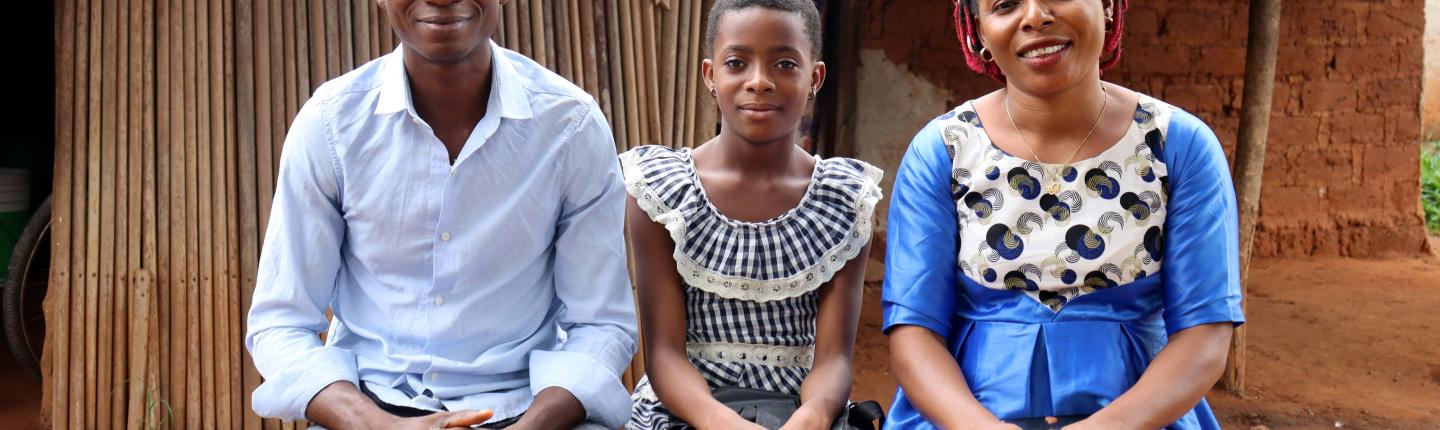
A parenting skills programme called Families Make the Difference has improved parenting practices and significantly reduced child labour in cocoa-growing communities in Côte d’Ivoire, according to a recent evaluation.
Families are crucial to child development. Safe, stable, and nurturing relationships help children grow and learn. A supportive family environment also protects children from risks, such as child labour. In cocoa-growing communities in West Africa, where most child labour happens within the household, caregivers are key decision-makers in determining whether children engage in harmful work. Strengthening parenting skills is therefore a crucial aspect of tackling child labour.
In this context, ICI partnered with Nestlé to pilot a parenting skills programme called Families Make the Difference in 11 cocoa-growing communities.
The Families Make the Difference curriculum was developed by the International Rescue Committee and covers topics such as positive parenting, communication, child development, and non-violent discipline, delivered over 11 sessions.
An evaluation of this pilot project shows promising results.
Strong improvement in parenting practices
The Families Make the Difference programme significantly strengthened caregivers’ knowledge, with especially strong gains among women, who participated more consistently in the sessions. These increases in knowledge translated into improved parenting practices. For instance, children in Families Make the Difference communities reported a 25% increase in caregiver-child interactions, such as talking, reading, playing, or doing schoolwork together from the start to the end of the project, compared to the control group.
What I appreciated most about the programme was learning about empathy, how to play with children, share responsibilities at home, and build harmony and understanding within the couple.
Female participant
Significant reduction in hazardous child labour
The programme significantly reduced hazardous child labour. The prevalence of hazardous child labour decreased by 40% across treatment communities, including households that did not attend the sessions, and by 54% among children whose caregivers attended the Families Make the Difference sessions. The 40% reduction in treatment communities may reflect several factors, including parallel awareness-raising activities with non-participants and the sharing of key messages by participants within their communities.
Furthermore, the programme protected children from increases in working hours. While working hours rose among children in control communities, they slightly decreased among children in treatment communities, showing a protective “buffer effect”.
A promising approach to scale up
The reductions in hazardous child labour and children’s working time suggest that the Families Make the Difference should be replicated and integrated into broader programmes addressing child labour. Furthermore, the positive feedback from participants, including great appreciation for the sessions and requests for more, highlights the programme’s relevance for scale-up.
To help organisations interested in scaling up parenting skills interventions, ICI has developed a Learning into Action brief outlining practical measures for effective implementation, based on lessons learned from both the Families Make the Difference pilot and other parenting initiatives.